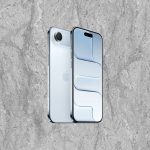
Apple introduced the iPhone Air at their September 2025 event.

The iPhone Air replaces the “Plus” slot in the lineup — think of it as the lightweight, slim sibling of the regular iPhone 17.
Key Specs & Features
Here are some of the standout features and specs:
TABLE OF CONTENTS
Table of Contents
iPhone 17 vs iPhone Air, what’s common
Both share quite a few modern iPhone features:
- Both are part of the 2025 lineup, released / pre-orders around September 2025.
- Both support ProMotion displays at up to 120 Hz refresh rate.
- Both have the new front camera (“Center Stage”) with an 18 MP sensor.
- Both are using Apple’s newer chipsets / architectures: e.g. the iPhone Air has the A19 Pro chip. The iPhone 17 uses A19 (non-Pro) chip.
- Both have modern durability, water/dust resistance (IP68), etc.
iPhone 17 vs iPhone Air, Key Differences
| Feature | Detail |
|---|---|
| Thickness / Weight | Just 5.6 mm thick — Apple’s thinnest iPhone ever. The Verge+2MacRumors+2 Weight around 165 grams. The Verge+2MacRumors+2 |
| Display | 6.5-inch ProMotion display, 120 Hz refresh rate. The Verge+2MacRumors+2 |
| Materials / Build | Titanium frame + Ceramic Shield for durability. Described as more durable than previous models despite slim profile. The Verge+2MacRumors+2 |
| Processor / Connectivity | Uses the A19 Pro chip. Also has a new modem chip (C1x) and supports advanced wireless standards. The Verge+2MacRumors+2 |
| Camera | Single rear camera (48 MP) rather than a multi-lens setup. MacRumors+2The Verge+2 |
| SIM | eSIM only — it doesn’t have a physical SIM card slot. Business Insider+3The Verge+3MacRumors+3 |
| Release / Price | Released September 19, 2025 in many countries. Preorders start September 12. Price starts at about US$999 for base storage. |
Why pick iPhone Air instead of iPhone 17 or iPhone 17 Pro?
Featherweight build, luxury feel
At just 5.6 mm thin and about 165 g, the iPhone Air is the lightest and slimmest iPhone Apple has ever made. That makes it noticeably easier to slip into a pocket, carry in hand, or use comfortably one-handed compared to the Pro lineup.
Its titanium chassis and Ceramic Shield glass add both durability and a premium finish, blending strength with elegance.
Fast and capable with modern silicon
Inside, the Air runs on the A19 Pro chip — the same generation powering the Pro models. While it doesn’t have the same cooling headroom or GPU muscle as the Pro Max, it delivers more than enough speed for daily use, gaming, AI features, and multitasking.
Excellent screen and future-ready connectivity
The Air features a 6.5-inch ProMotion panel with a silky-smooth 120Hz refresh rate, making animations and scrolling fluid.
Connectivity is equally forward-looking with Wi-Fi 7, Bluetooth 6, and the new C1X modem plus N1 wireless chip, offering faster, more efficient performance.
Battery endurance that holds up
On average, you’ll see about 27 hours of video playback, which comfortably covers a full day of regular use. Pair it with Apple’s MagSafe battery pack, and that figure can stretch up to around 40 hours, giving road warriors or travelers more flexibility.
Designed for style and expression
If design matters to you, the Air is unapologetically a statement piece. The slim silhouette, refined materials, and striking colors make it a phone you’ll want to hold and show off.
Smart balance of features vs. price
The Air delivers much of what makes the Pro models appealing — high-end processor, ProMotion display, durable titanium frame — but without the top-tier pricing. For users who don’t need triple-camera systems or maximum thermal headroom, the Air offers a sweet spot between performance, design, and value.
What you give up with the Air
Naturally, the Air’s design focus comes with trade-offs:
Fewer camera lenses — no telephoto or ultra-wide, limiting specialized shots.
Less thermal headroom — performance dips faster under extended heavy loads.
Smaller battery — fine for daily use, but not as long-lasting as the Pro Max under stress.
Missing Pro-exclusive software features (like advanced video recording modes).
When the Air is the right choice
The iPhone Air makes sense if you:
Prefer a lighter, sleeker phone over maximum camera or battery.
Rarely do prolonged 4K editing, heavy gaming, or zoom-focused photography.
Want a premium chip, smooth screen, and modern connectivity without Pro pricing.
Care about aesthetics as much as performance.
Is the Air as tough as the iPhone 17, 17 Pro, or 17 Pro Max?
Apple engineered the Air to be surprisingly durable for its size, though it naturally makes different trade-offs.
Strengths it shares with Pro models
Ceramic Shield 2 front and back glass for improved scratch/drop resistance.
IP68 water/dust resistance, surviving submersion and keeping dust out
Titanium frame, boosting strength-to-weight ratio and reducing bending risk.
Where the Air is more vulnerable
Heat management: No vapor chamber cooling like Pro/Pro Max, meaning higher temps and quicker throttling under sustained load.
Rigidity: While titanium helps, the ultra-thin frame simply has less material to resist bending forces.
Battery wear: Smaller cell means more stress per cycle, which could affect long-term lifespan.
Internal safeguards: Pro models benefit from added shielding and structural space to protect components that the thin Air cannot accommodate.
In normal daily use — drops, splashes, dust, casual rough handling — the Air is nearly as durable as its Pro siblings. But under extreme strain (heat, bending pressure, long gaming sessions), the Pro and Pro Max have the edge in resilience.
Why the iPhone Air was created
The iPhone Air wasn’t an accident — it reflects Apple’s ongoing “Air” philosophy and targeted product strategy.
Continuing Apple’s ‘Air’ legacy
MacBook Air (2008): defined ultra-thin laptops.
iPad Air (2013): made the tablet sleek yet powerful.
Now, iPhone Air takes that same ethos — light, thin, stylish, yet capable — and brings it to Apple’s most popular device.
Meeting demand for lighter phones
Many users consistently ask for thinner, more portable designs, even if it means smaller batteries or fewer cameras. Apple’s research showed a meaningful audience ready to trade “maximum everything” for effortless portability.
Adding variety to a crowded lineup
With iPhone 16/17 families covering mainstream, large-screen, and Pro power users, Apple saw room for a model defined not by camera count but by design minimalism. The Air fills that niche.
Enabled by modern materials
Titanium frame strong enough for a 5.6 mm body.
Ceramic Shield 2 providing thin yet tough glass.
Efficient A19 Pro chip allowing great performance without huge batteries.
MagSafe ecosystem offsetting smaller internal battery.
Positioning in Apple’s strategy
The Air isn’t meant to replace the Pro — it’s built for those who prioritize elegance and portability. It appeals to users who once loved the “mini” but want a bigger screen, or those who value style as much as specs.
Marketing significance
Like the MacBook Air moment where Steve Jobs pulled a laptop from an envelope, the iPhone Air showcases Apple’s design leadership. It tells customers Apple can still innovate by making technology thinner, lighter, and more refined.
In short: iPhone Air revives Apple’s Air philosophy — a product that’s impossibly slim, easy to carry, and visually striking. It’s the phone for design-focused users who want modern performance without the bulk of Pro models.