An Apple Certified Mac Technician refurbished Mac offers several advantages.
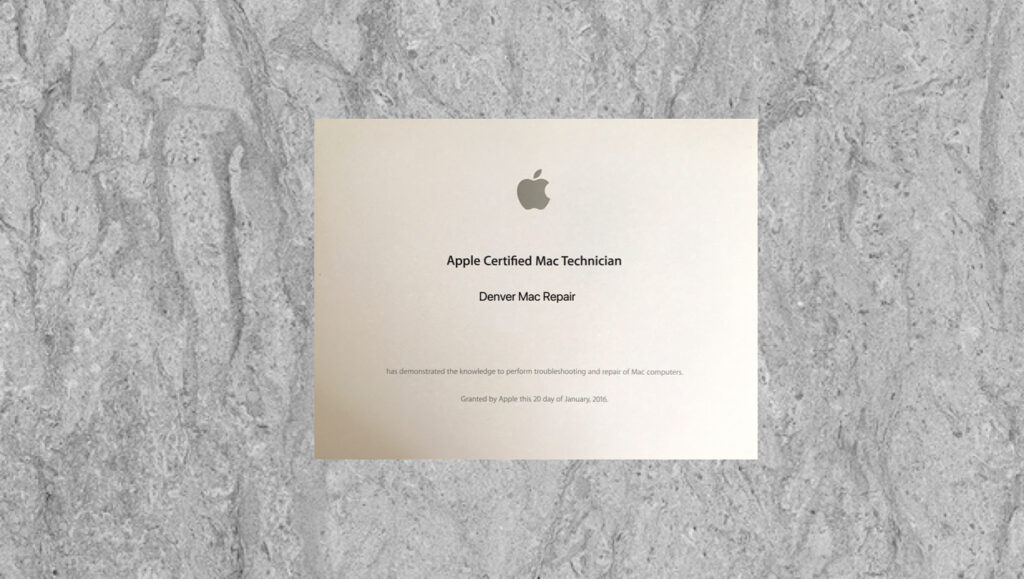
An ACMT (Apple Certified Macintosh Technician) is a professional qualification awarded by Apple Inc. that confirms a technician’s expertise in diagnosing, servicing, and repairing Apple hardware, including Mac computers, in line with Apple’s official guidelines. Technicians who hold the ACMT credential showcase competence in areas such as system troubleshooting, component replacement, safety protocols, and the use of Apple’s specialized tools and reference materials. This certification is generally required for technicians employed by Apple Authorized Service Providers or other organizations performing approved repairs, ensuring they adhere to Apple’s rigorous standards for quality and reliability when working on customer devices.
TABLE OF CONTENTS
Table of Contents
Why is buying a refurbished Mac from an Apple Certified Technician important?
Purchasing a refurbished Mac from an ACMT (Apple Certified Macintosh Technician)—a certification granted by Apple Inc.—is significant because it has a direct impact on the dependability, precision, and long-term usability of the system you’re buying. An ACMT is trained to adhere to Apple’s official diagnostic procedures rather than relying on trial-and-error, meaning the computer has been assessed using the same service standards employed by authorized repair facilities. This process generally involves comprehensive hardware testing, confirmation of logic board functionality, evaluation of thermal performance, battery health assessment, and inspection of all input/output components such as ports, Wi-Fi, and cameras.
Equally important, an ACMT has in-depth knowledge of common failure patterns in Apple hardware—such as known keyboard issues in certain MacBook models, SSD wear trends, or power management vulnerabilities—and can address these proactively instead of only fixing visible problems. Any repairs or part replacements are completed according to Apple’s specifications, using either genuine components or high-quality equivalents, and installed following proper procedures (including correct torque application, adhesive use, and necessary calibration steps). This attention to detail minimizes the likelihood of subtle defects like improper display alignment, battery positioning issues, or inefficient thermal performance that are often found in lower-tier refurbishments.
There is also a data integrity and firmware component that is frequently underestimated. An ACMT is equipped to correctly manage firmware restoration, handle T2 and Apple silicon security protocols, and perform clean operating system installations without leaving residual data or improperly configured settings. The result is a Mac that operates as a clean, stable baseline system rather than one burdened with hidden software issues.
Lastly, buying from an ACMT-backed refurbisher typically provides a level of accountability—including warranty coverage, documented service history, and consistent repair standards. You’re not simply purchasing a used Mac that happens to power on; you’re investing in a machine that has been systematically verified against Apple’s service benchmarks. In practical terms, this reduces overall ownership costs by minimizing early hardware failures, unexpected repair expenses, and performance irregularities.
What are the risks of buying a Mac from Facebook Marketplace, Craigslist or eBay?
Purchasing a Mac through peer-to-peer platforms such as Facebook Marketplace, Craigslist, or eBay can appear to be a strong value—but the underlying risk is considerably greater than most buyers anticipate. The fundamental issue is that these platforms operate as unregulated, seller-driven ecosystems, which means there is no standardized quality assurance, no reliable recourse, and minimal verification of the product being sold.
The most significant concern is fraud and inaccurate representation. Listings often rely on stock imagery or vague, misleading descriptions, and in some situations, the item may not exist at all. Scammers frequently encourage irreversible payment methods such as Zelle, cash, or gift cards, making recovery nearly impossible once funds are transferred. Peer-to-peer marketplaces represent a substantial portion of consumer electronics fraud, with schemes like fake listings, non-delivery, and bait-and-switch tactics occurring regularly.
Closely tied to this is the risk of undisclosed hardware defects. A Mac may appear functional during a brief inspection but still suffer from deeper issues—such as a worn battery, deteriorating SSD, thermal inefficiencies, or logic board instability. Many sellers either lack the tools to properly evaluate the system or deliberately omit these problems, leaving buyers without clear visibility into the device’s true condition.
Another critical issue—particularly for Macs—is iCloud / Activation Lock and ownership status. If the device remains linked to a previous owner’s Apple ID, it can become partially or entirely unusable. In more severe cases, the system may have been stolen, which introduces the possibility of remote locking or confiscation.
There is also the absence of warranty protection or return policies. Transactions on platforms like Craigslist and Facebook Marketplace are typically final, offering no refunds, technical support, or accountability if the system fails shortly after purchase. While eBay does provide some level of buyer protection, it does not cover every scenario—especially when problems are not immediately evident.
Buyers also assume data security and software-related risks. If the Mac has not been properly erased or reinstalled, it may retain residual user data, misconfigured firmware, or potential security vulnerabilities. This is an area that most casual sellers do not handle with proper rigor.
Finally, there is a broader structural concern: the absence of a consistent refurbishment standard. Any seller can label a Mac as “refurbished” or “like new,” but there is no requirement that the system has undergone thorough testing, repair, or validation. This is the key distinction between purchasing from an unknown individual and a certified technician—you are either acquiring a verified machine or accepting a degree of uncertainty.
In practical terms, buying through these platforms is not inherently a poor choice—but it is a risk transfer decision. You are exchanging a lower upfront cost for increased uncertainty, a higher likelihood of failure, and effectively no protection after the sale.
What are the risks of buying a Mac from a pawn shop or PC repair shop?
Purchasing a Mac from a pawn shop or a general PC repair business falls somewhere between a peer-to-peer transaction and a professionally refurbished system—but it still carries notable risks, primarily due to inconsistent processes and limited Apple-focused expertise.
The central concern is the absence of Apple-specific diagnostic discipline. Unless the business employs an ACMT (Apple Certified Macintosh Technician) certified by Apple Inc., they are generally not utilizing Apple’s official diagnostic tools or service protocols. As a result, key components—such as logic board stability, thermal efficiency, battery calibration, and SSD lifespan—may not be thoroughly assessed. While many PC-oriented shops are skilled in working with Windows-based systems, they often do not fully account for the complexities of macOS firmware, T2 or Apple silicon security architecture, or known Apple hardware failure trends.
There is also risk associated with part quality and installation practices. Repairs are frequently completed using third-party or reclaimed components with varying levels of reliability. For instance, a replacement display may function but fail to meet original brightness or color standards, or a battery may appear healthy while lacking proper cycle calibration. Without adherence to Apple’s installation requirements—such as precise adhesive placement, correct torque application, and proper sensor pairing—subtle performance or reliability issues can emerge over time.
Another factor is partial or surface-level refurbishment. Pawn shops in particular tend to follow a resale-oriented model rather than a comprehensive refurbishment process—they confirm that the device powers on and performs basic functions but typically do not conduct in-depth testing, preventative servicing, or proactive component replacement. Some PC repair shops may take additional steps, but unless they specialize in Apple systems, their workflows are rarely consistent or standardized.
You also need to account for uncertain device history and sourcing. Pawn shops often obtain inventory from a wide variety of sources, and while they comply with legal intake requirements, they may lack detailed knowledge of how a device was previously used or maintained. This uncertainty can result in hidden wear, particularly in components like SSDs and batteries, which degrade based on usage patterns as much as age.
Another consideration is software integrity and security handling. If the Mac has not been properly erased and reinstalled using correct macOS procedures, it may retain leftover user data, firmware inconsistencies, or incomplete system resets. This becomes increasingly important with newer Macs, where secure boot processes and activation states play a critical role in usability.
Finally, warranty coverage and accountability are often limited or unclear. Some shops provide short-term guarantees or store-specific warranties, but these are typically more restrictive than those offered by dedicated refurbishers. If a hidden issue appears after the coverage period, the financial responsibility generally falls on the buyer.
In practical terms, the issue is not that every pawn shop or PC repair business sells unreliable Macs—it’s that quality varies widely depending on the shop’s expertise and operational discipline. Without Apple-specific training and standardized refurbishment practices, you are depending on best-effort work rather than a consistent, verifiable service standard.
What are the advantages of buying a refurbished Mac from a shop that employees ACMTs, like Denver Mac Repair or Boulder Mac Repair?
Purchasing a refurbished Mac from a business that employs ACMTs (Apple Certified Macintosh Technicians)—such as Denver Mac Repair or Boulder Mac Repair—effectively transforms the transaction from a typical “used electronics purchase” into a structured, standards-driven refurbishment process. That distinction results in several clear, measurable advantages.
First, you receive Apple-level diagnostic verification, rather than simple functionality checks. Shops like these emphasize that their systems are evaluated using Apple-aligned diagnostic procedures and thoroughly tested prior to sale. This ensures the Mac is not merely operational—it has undergone systematic validation of critical subsystems such as the logic board, storage, thermal management, and onboard sensors, significantly lowering the probability of hidden hardware issues.
Second, there is workflow consistency and rebuild integrity. These businesses fully refurbish their inventory—cleaning, restoring, and optimizing each machine with a fresh operating system installation—instead of just reselling it. This reflects a repeatable process that may include disassembly when appropriate, detailed component inspection, correct reassembly, and full system validation. From a technical standpoint, you are purchasing a device that has experienced a controlled lifecycle reset, rather than inheriting unknown prior usage conditions.
Third, you benefit from component quality control and compatibility assurance. Environments led by ACMTs prioritize parts that meet Apple specifications or equivalent standards, reducing the likelihood of issues such as unstable power delivery, inconsistent display performance, or inaccurate battery reporting. This is particularly critical in Macs, where hardware, firmware, and sensor systems are tightly integrated—improper components or installation methods can introduce subtle but persistent faults.
Fourth, there is warranty-backed responsibility, which stands out as a major advantage compared to informal marketplaces. Both shops provide warranty coverage, often with extended options, meaning that failures under normal operating conditions are addressed through repair or replacement. This effectively transfers a significant portion of the risk from the buyer to the seller—something not available in peer-to-peer or loosely refurbished transactions.
Fifth, you gain access to specialized post-sale support. If issues arise—or if you require performance tuning or upgrades—you are working with technicians specifically trained on Apple systems. This leads to faster diagnostics, more accurate repairs, and consistent service continuity throughout the lifespan of the device.
Sixth, there is clarity and service traceability. Certified technicians are typically able to document what components were tested, repaired, or replaced, giving you a more transparent understanding of the Mac’s condition and service history. This level of insight is valuable when assessing long-term reliability and potential resale value.
Finally, you still capture the financial advantage of buying refurbished—notably lower cost compared to new hardware—without taking on the usual uncertainty. In effect, you are compressing the risk profile: retaining the savings while eliminating most of the common failure points associated with unverified used systems.
In practical terms, purchasing from an ACMT-supported shop like these is not simply “safer”—it represents a fundamentally different category of purchase. You are acquiring a Mac that has been systematically diagnosed, restored, validated, and supported within a defined technical framework, rather than one that merely happens to function at the time of sale.
USED AND REFURBISHED APPLE EQUIPMENT


- Why should I look for a Mac refurbished by Apple Certified Mac Technicians?
- Why does Apple matter when buying a MagSafe 1 or 2 adapter?

- What is the iPhone Air?

- What does it mean when an external hard drive format is for Mac or for Windows?
- Designed by Apple in California. Loved in Colorado.

- How do I migrate my iTunes and App Store purchases to another Apple Account.

- Boulder Mac Repair is currently purchasing Apple Devices for resale.

- What’s new in iOS 26?